
Most plumbers think in terms of hot water systems. They’re used to insulating pipes to keep heat in, not heat out.
But ice bath plumbing has the opposite challenge - you’re moving 5°C water through pipes that might be sitting in 25°C air.
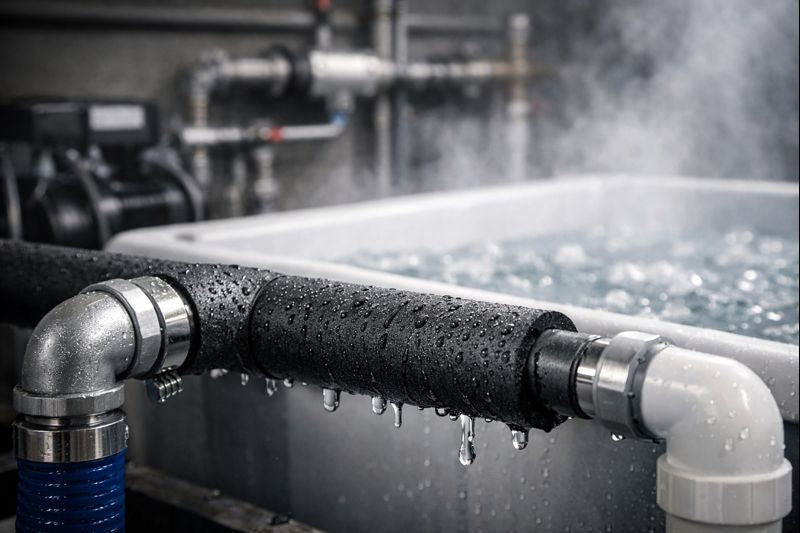
Without proper insulation, you’re losing efficiency and you’re creating condensation problems that can slowly damage your facility.
We’ve seen facilities where the “plumbing leak” was actually just condensation dripping from uninsulated return lines.
The Two Main Setup Types And Their Plumbing Needs
Single Tub Systems: Simple but deceiving.
The short pipe runs make people think insulation doesn’t matter.
Even a 3-meter uninsulated return line can add 1-2°C to your water temperature, and litres of water per week in drips.
Multi-Tub Systems: This is where understanding balance lines becomes important.
Many plumbers will want to run individual supply lines to each tub only, but if you have an unpressurised balance line connecting the tubs, water levels will equalise naturally.
This is a step you simply cannot skip.
What Your Plumber Needs to Know
Before they start, make sure they understand:
- Insulation is critical - Every pipe carrying chilled water needs proper insulation
- Balance lines matter - For multi-tub systems, an unpressurised balance line can eliminate the risk of overflows and uneven water levels
- Drainage matters - Ice baths need proper drainage for cleaning and emergency situations, not just overflow protection
- Condensation management - Proper ventilation prevents water damage
Ice bath plumbing isn’t complicated, but it’s different.
Find a plumber who’s willing to learn, or better yet, one who’s done ice bath setups in the past.
They understand cold water systems and the challenges that come with them.
Because when it comes to ice bath plumbing, experience with hot tubs isn’t enough.
Share:
Why Consistency is Key: Ensuring Every Plunge is Perfect
The $28,600 Mistake Everyone Makes: Why "Cheap" Chillers Cost More